November 21, 2008
Important Links
Ct Fire Apparatus
Welcome
 
You are not currently logged in.
What's New at CFEMA
NOVEMBER MEETING

Posted On: Nov 20, 2008 (09:52:53)

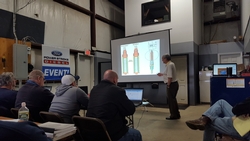
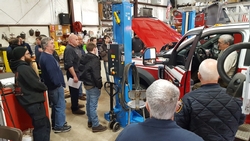
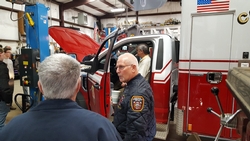
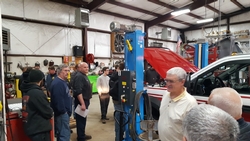
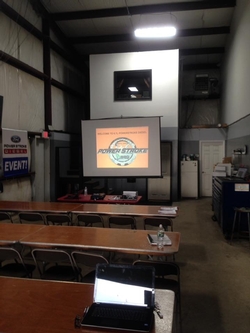
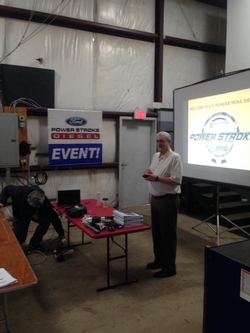
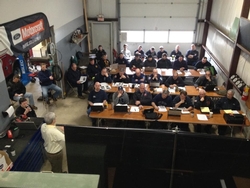
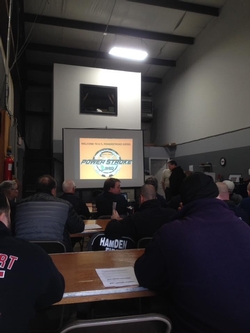
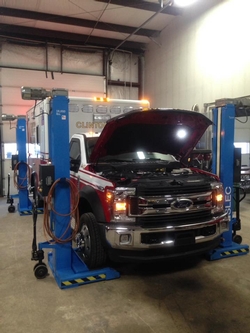
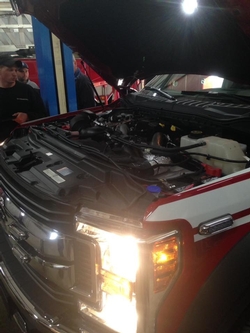
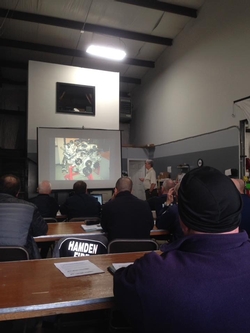
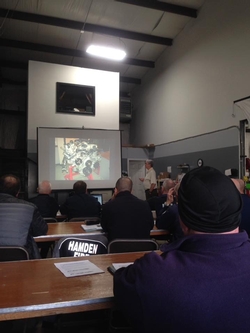
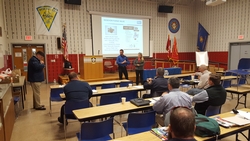
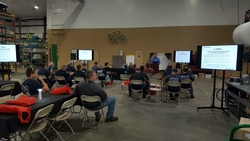
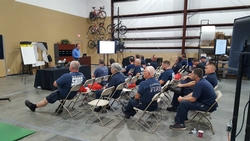
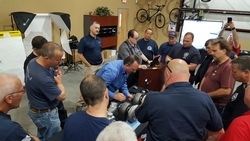
The CFEMA would like to thank Dave Paige from Shipman's for his time and effort in educating the Association in the upcoming changes due to take place January 1, 2009 in relation to NFPA 1901. All in attendance agreed that this was very informative and warrents looking into further as it could have a big impact on what we do every day.

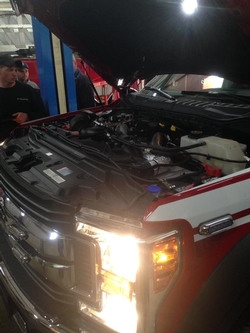
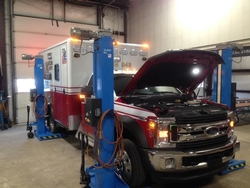
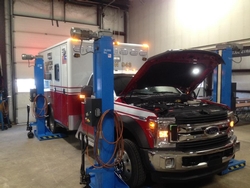
Check the Photo Gallery for pictures of this meeting as well as others!

Reminder there will be no meeting for the month of December

Become a member !

Updated On: Jun 28, 2008 (14:52:00)


The Connecticut Fire equipment Mechanics Association is looking for new members. If you are a mechanic or other individual or company that works on emergency apparatus, and/or equipment you are invited to join us. Click on the downloads area to the left, download an application and submit it along with a check to the address shown. If you would like additional information drop us a e-mail and we will be happy to get back to you.


BE CAREFUL-WORK SAFELY

Updated On: Sep 18, 2008 (15:51:00)

Mechanic Crushed Under Cab

A mechanic working on the engine of a tilt-cab fire apparatus in California died when the cab lowered and crushed him against the left front tire.

The accident occurred in a commercial truck shop that specializes in fire apparatus, school buses and construction equipment. The mechanic had been working alone for about 30 minutes. When other employees found the victim, they immediately lifted the cab and began efforts to revive him. He was pronounced dead at the scene.

The accident was under investigation, and no cause had been determined.

Upcoming Meetings & Educational Seminars

Updated On: Oct 12, 2008 (16:17:00)


October......On Spot    (West Shore FD)

November.......NFPA 1901 new Regulations  (New Haven Fire Academy)

December....NO MEETING  Happy Holidays!

January.....Akron  (Rocky Hill FD)

Sterling Trucks

Updated On: Oct 14, 2008 (20:28:00)

Daimler to Drop Sterling Brand, Eliminate 3,500 Jobs


In a sweeping move, Daimler AG announced today that it was dropping the Sterling Trucks brand, eliminating about 3,500 jobs and closing two of its factories as it reorganizes its North American operations.


Daimler will retain the Freightliner and Western Star brands and will add products to those brands to fill in for some missing Sterling business, the company said in a release. The company did not offer details.


The project, which will cost $600 million to implement, is aimed at saving the truck division $900 million a year by 2011, company officials said in a conference call Tuesday. That $600 million total includes $190 million in employee separation costs and $160 million in dealer and supplier costs.


“The North American commercial truck market is facing a fundamental change because of the higher costs of producing products and rising operational costs,” said Andreas Renschler, head of the Daimler Trucks division. “Those factors as well as the decline in the overall U.S. economy required the restructuring.”


“A recovery is not on the near-term horizon,” Rehschler added. “We need to accelerate efforts and we have to act now.”


“Plans based on an expectation of brief, sharp market events driven by regulatory change, followed by periods of reasonable growth, are out-of-step with the emerging realities of the latter part of this decade," said Chris Patterson, President and CEO of Daimler Trucks North America, in the release. “We've examined every part of our organization in light of the changed economic environment.”


Sterling's plant in St. Thomas, Ontario, will close in March.


Daimler will shutter its commercial-vehicle plant in Portland, Oregon, in June 2010, when that factory's labor contract runs out. The North American truck division's headquarters will remain there.


The closures of the St. Thomas and Portland factories will cost 2,300 manufacturing jobs, while an additional 1,200 administrative positions will be cut in connection with the reorganization.


Production of Western Star trucks will be transferred to a plant in Santiago, Mexico. Freightliner is sticking to plans to start making its Cascadia model at a new factory in Saltillo, Mexico.


Commenting on the plant closings and the lost jobs, Renschler defended his company’s long track record history as an employer in the U.S., but said it would be “bad leadership” to ignore the current economic downturn.


“This is the best option to ensure the long-term competitiveness of Daimler Trucks North America,” he said. “We will get Daimler Trucks back into fighting shape.”


Launched in 1998, the Sterling brand achieved only one-fourth of Freightliner’s market penetration, Daimler said.

Understanding CAFS Performance

Updated On: Sep 18, 2008 (16:03:00)

Understanding CAFS Performance

Some departments view compressed-air foam systems as extensions of standard apparatus water pump systems. They assume that all the performance ratings and conditions that apply to water pump systems also apply to CAFS. That is not true.

Here is a summary of some of the factors used to determine CAFS performance.

Flow and pressure ratings. NFPA 1901 rates pumps used on structural apparatus in terms of water flow rates at pressures of 150, 200 and 250 psi. A minimum rating of 250 gpm at 150 psi is required. NFPA 1906 rates pumps used on wildland apparatus in terms of water flow rates at pressures ranging from 100 psi to 400 psi. A minimum rating of 10 gpm at 100 psi is required.

In contrast, both NFPA standards rate CAFS in terms of simultaneous flowrates of water and air at pressures of 125 psi. The old ratings at 100 psi are no longer used. There are no requirements for minimum flow rates or for flowrates at higher pressures — one rating point is all that is required. The water and air must be discharged simultaneously at 125 psi in a ratio of at least 2 gpm of water for every 1 scfm (standard cubic feet per minute) of air. Some manufacturers rate the water and air separately without stating the simultaneous rating, but that is not correct. The system must be able to discharge both water and air at the required pressure and ratio at the same time — if you don’t see the word “simultaneous” in the rating, beware and ask.

Note that the water pump must still meet the requirements for either structural apparatus or wildland apparatus when discharging water without the compressed air flowing. This may be a problem for some slip-on CAFS units with separate gasoline or diesel engines. If you need a minimum water flow rate and pressure, especially if you want to use the unit to gain points on your ISO rating, you need to consider the water-only ratings as well as the CAFS rating.

Operation of other equipment. NFPA specifies that water pump systems must be able to produce the rated flow rates and pressures while the vehicle electrical system is delivering the total continuous electrical load and any engine-driven line-voltage generator is delivering 50% of its rated capacity. That’s pretty specific. In contrast, compressed-air foam systems must “be capable of supplying power for operating the CAFS at its rated capacity while simultaneously providing power to all other power-dependent systems installed on the apparatus.” That’s not quire as specific because it doesn’t state the load levels of the other equipment. The general requirement is still the same — the manufacturer cannot shut off other equipment to have enough horsepower to meet the CAFS performance requirements. This factor primarily applies to CAFS operated by vehicle engines through power take-offs.

Water-to-air ratios. The NFPA testing and rating requirements specify a minimum 2-to-1 ratio of water to air for CAFS — at least 2 gpm water for every 1 scfm air. The old ratio of 1-to-1 produced a less effective foam solution for most fires and is no longer required. Departments that like to use a wetter foam solution should select a system with a higher range of water-to-air ratios.

Nozzle selection. Nozzle selection for use with compressed-air foam is left to each department’s preference. There is no requirement or standard of performance. Those departments that use CAFS a lot often specify large-diameter, smooth-bore nozzles for maximum reach with pistol-grip handles for maximum control. Remote-control bumper monitors with smooth-bore tips provide an excellent way to hit fires fast without having the crew pull a handline.

Overall firefighting effectiveness. When CAFS was first introduced, there were claims that it was 10 times more effective in fighting fires than plain water. In general, most people now agree that ordinary nozzle-aspirated Class A foam can be roughly two times more effective than water, and compressed-air foam can be four times more effective. Effectiveness is measured in many ways, but the overall consensus is that compressed-air foam will knockdown fires in less time with less total water, but at the same application flow rate as water. Compressed-air foam will also lower interior temperatures faster, help prevent rekindles, and reduce water damage. Handlines filled with compressed-air foam are lighter and therefore easier to maneuver, but have greater nozzle reaction forces and are harder to control. Finally, compressed-air foam can be pumped to higher elevations with the same pump pressure, which is helpful in fighting high-rise fires and wildland fires in steep terrain.

If your department is thinking about adding CAFS to an apparatus, you need to understand the ratings and operating conditions to get the best performing system for your needs. Start by selecting a system that meets your requirements for water flowrates and pressures, then make sure it also meets the special requirements for CAFS. Once you have the system in service, train with it frequently to make sure firefighters know how to use it effectively and safely.

Crimson

Posted On: Sep 18, 2008 (15:54:05)

Crimson Fire Introduces New Model

The First Response All Call vehicle from Crimson Fire features a modular design to provide a choice of firefighting, rescue, patient transport and command functions in a single apparatus. The new model was introduced at Fire-Rescue International in August.

“Our customers are telling us that rising fuel prices, tight budgets, fewer volunteers and continued regulation will force them to look for lower-cost and more flexible trucks in the future,” said Kevin Crump, president of Crimson Fire. “The modular design of the FRAC allows the truck to be configured in different ways to deliver multiple capabilities.”

The new model is built on a Ford F-650 chassis and offers customers a choice of any two of the four available modules for the body. The pump module may be mounted in the middle of the vehicle or at the rear and includes pumps to 1,250 gpm and tanks to 300 gallons with 200-plus cubic feet of storage and an advanced compressed air foam system. The rescue module offers 300-plus cubic feet of storage with optional hydraulic rescue tool systems and generators. The transport module is designed as a fully functional BLS or ALS ambulance with a cot, EMT bench and medical equipment storage space. The command module includes a command work station with a secured, centralized operations area and multiple storage cabinet options.

For more information, see your local Crimson Fire dealer or go towww.crimson-fire.com


1879 visitors since
Member Login
Username:

Password:


Not registered yet?
Click Here to sign-up.

Forgot Your Login?
Action Center
<<  November 2008  >>
S M T W T F S
1
2 3 4 5 6 7 8
9 10 11 12 13 14 15
16 17 18 19 20 21 22
23 24 25 26 27 28 29
30
Important Links
Ct Fire Apparatus
Google
Weather Report


 OUR CORPORATE MEMBERS

Please check the members area to the left for links to the websites


  • On Spot Automatic Snow Chains
  • Five Star Fire
  • Camerota Truck Parts
  • E.J. Boughton Co.
  • Gowans & Knight
  • Firematic Supply
  • Firstline Emergency Services
  • Fleetmasters
  • Kussmaul Electronics
  • Northeast Fire Associates
  • Rogers Repair
  • Twin Lights Apparatus Repair Div.
  • Nichols Fire Apparatus
  • St. Pierre of Ct.
  • Top Rung Inspection & Testing LLC


Visit Unions-America.com!
 Top of Page © Copyright 2008, Connecticut Fire Equipment Mechanics Association, All Rights Reserved.
Powered By UnionActive™
Hide the Right Hand Column